
I can understand why Replit has over 40 million users at the start of 2026. Its AI Agent has built over 5 million apps, and it’s still a trending AI-powered development platform. You can write, test, and deploy full-stack applications from the browser. Like with any other comprehensive solution, it’s not all roses and champagne. One of the reasons we started with FuseBase was the limitations of Replit as a vibe code solution.
While I managed to create an MVP relatively easily, after having five paying clients, I hit the proverbial “Scaling Wall”. I couldn’t provide professional, branded, and secure portals for all my clients. Of course, I could build the entire backend from scratch.
With all its advantages and popularity, Replit suffers from the “agent tax”, an effort-based pricing model with an unknown price for each AI interaction. Users describe anxiety with each request, as it can feel like a slot machine waiting for the cost of their AI query.
You will get the vibe of building fast, but some of the heavy lifting, like setting up scalable backends and authentications, is on the user. It’s not just me, reviewers complain about the lack of custom workflows, serious deployment issues, and the difficulty of shipping production-ready apps. We’ve identified 5 viable Replit alternatives for vibe coding in 2026.
TL;DR – Top Replit Alternatives
- Best for Agencies, SaaS teams, and organizations that run real software production – FuseBase
- Best for founders and makers who want quick MVPs – Lovable
- Best for individual developers who wish to use AI-assisted coding – Cursor
- Best for developers who want advanced AI reasoning for their code – Claude Code
- Best for solo app builders needing to validate ideas quickly – Bolt.new
What is Replit?
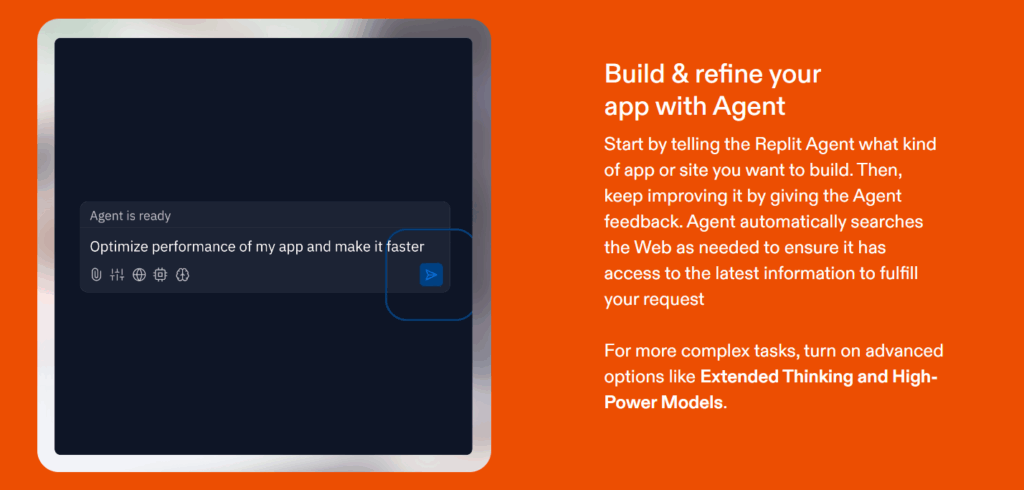
Replit started as a lightweight coding sandbox and has since become a full-stack, cloud-based development platform. In principle, you can take an idea and produce working software with no setup required.
The most prominent upgrades over time are its Ghostwriter, an intelligent coding assistant, and the Agent, which can generate applications and make autonomous changes. AI adoption enabled Replit to provide full-stack generation, guided debugging, and feature additions within the project workspace.
It has several pricing tiers. A relatively generous free plan is best for students and beginners, with its basic workspace, limited infrastructure, and no advanced AI. Pro licence costs $20 per month and includes Full AI Agent access and production-grade projects. Indie builders and freelancers can get a real sidekick. Scaling to a team or enterprise license is quite expensive, and that brings us back to the issue of cost control.
Replit also lacks a client management layer and business intelligence features such as smart trackers or internal agents. Luckily, developers and aspiring app builders can find numerous alternatives, and we chose the top 5 solutions available in 2026.
Top Replit Alternatives in 2026
| Solution | Pricing | Trial | Top features | Best for |
| FuseBase | Value-Based / Contact Sales | A free trial is available | Production-grade backend, Notion-like collaboration, AI agents that can execute workflows, and branded client and partner portals | Agencies, SaaS teams, and organizations that run real software production |
| Lovable | Starts at $25/month | Limited free usage | Full-stack Prompt-based application generation, almost no configuration, fast scaffolding, and AI-first workflows, Visual and design integrations | Founders and makers who want quick MVPs |
| Cursor | Starts at $20/month | A free trial is available | AI-native code editor, large-context refactoring, local repository support | Individual developers who want AI-assisted coding |
| Claude Code | Starts at $17/month | Free tier varies | High-quality code reasoning, has a large file context, refactoring, and quality documentation assistance | Developers who want advanced AI reasoning for their code |
| Bolt.new | Starts at $25/month | Limited free usage | Prompt-based full-stack generation, instant preview, and rapid iterations | Solo app builders needing to validate ideas quickly |
1. FuseBase – Best for Agencies, SaaS teams, and organizations that run real software production
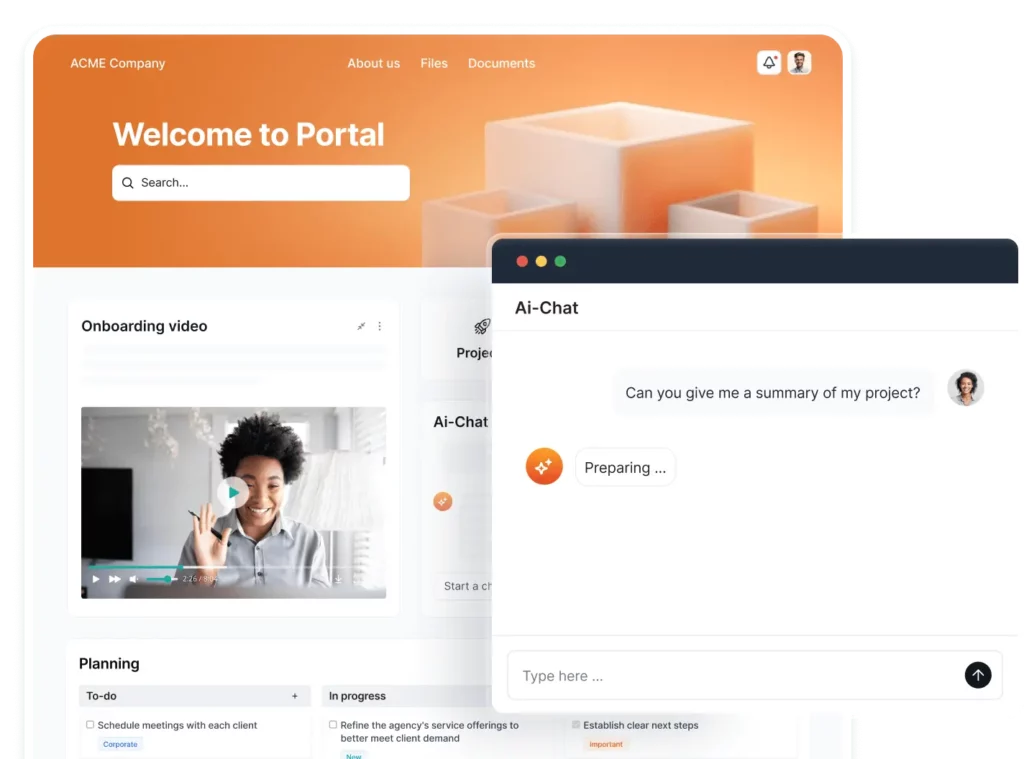
Our pivot from various vibe coding apps to building FuseBase as a production-ready software platform came organically. The platform combines AI-powered application building with vibe and web coding, a scalable, secure backend infrastructure, and collaboration for internal and external teams, similar to Notion.
Another feature includes AI Agents for conversational intelligence and smart trackers. FuseBase’s unique feature is a branded client, partner, and team portals. FuseBase integrates with IDEs, CLIs, and modern workflows. It also provides a secure and scalable execution layer. All that makes it suitable for agencies, SaaS teams, and organizations that need to support real clients.
Pros:
- Designed for production and not just demos
- Offers strong collaboration and governance
- Not locked to one AI provider
- Can easily scale from solopreneurs to enterprise users
Cons:
- More potent than Replit, so onboarding takes longer
- It can be overkill for simple learning or small projects
2. Lovable – Best for founders and makers who want quick MVPs
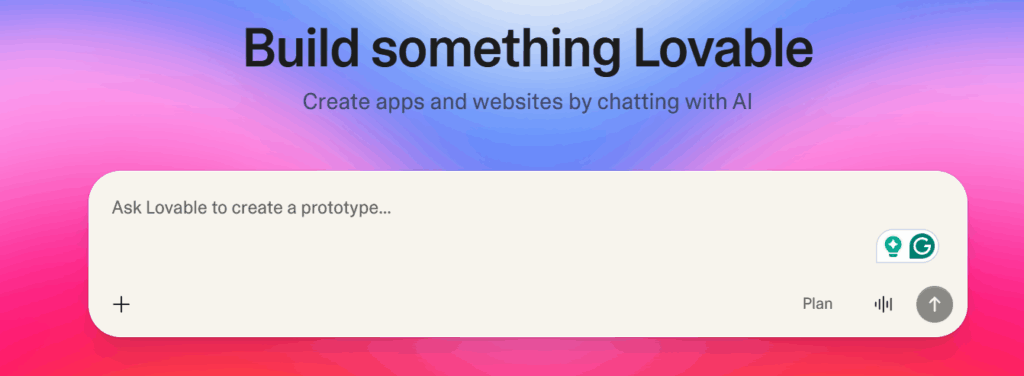
Lovable is an AI-first platform designed to generate applications from natural language prompts quickly. The primary focus is on speed and accessibility, enabling users to go from idea to a working app quickly.
While Lovable is a legitimate Replit alternative in some respects, it works best as a local or hybrid development tool rather than an all-in-one platform. It looks like a stripped-down, simpler version with a friendlier interface that relies more on collaboration than on high-level development. When apps grow more complex, you will have to add a layer of dictionary tooling for backend control and long-term maintenance.
Pros:
- Quick path to prototype
- Lower barrier to entry
- Clean and simple user interface
Cons:
- Minimal backend depth
- Not intended for enterprise or scaling
3. Cursor – Best for Individual developers who want AI-assisted coding
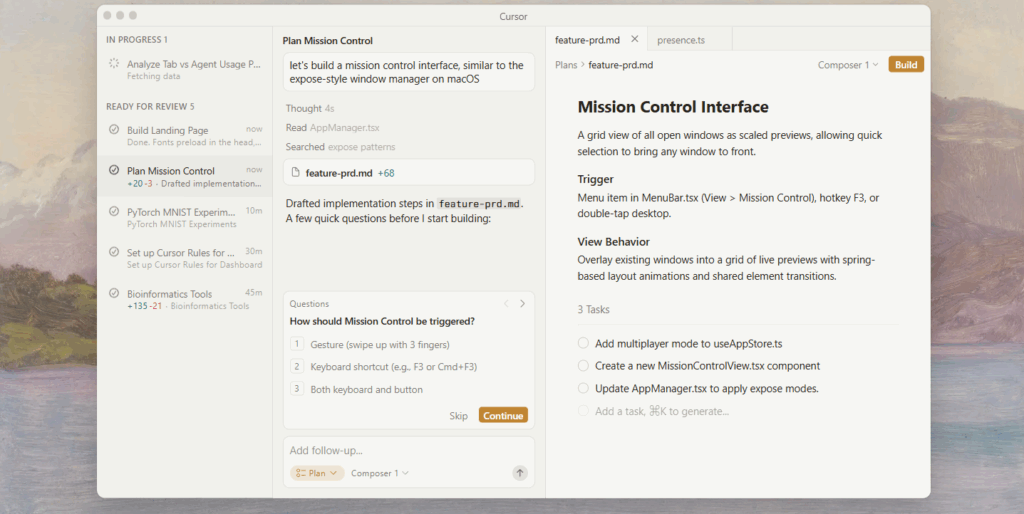
Cursor is a popular AI-powered code editor created on familiar IDE paradigms. An AI assistant helps you get autocomplete, fix bugs, and refactor. Cursor relies on GPT-4 and lets you ask questions about the codebase and edit files with conversation. The platform is primarily aimed at improving developer productivity through AI-assisted coding within the editor.
You can use Cursor as a local or hybrid development tool, and teams often pair it with separate infrastructure and deployment systems. It’s something Replit provides out of the box. However, Cursor has Agents that turn ideas into code and provide strong support for large codebases.
Pros:
- Excellent AI coding assistance
- Offers a familiar workflow for developers
- Can integrate and work well with existing repositories
Cons:
- No built-in backend or hosting
- Doesn’t offer collaboration or portals
- It’s not a standalone software platform
4. Claude Code – Best for developers who want advanced AI reasoning for their code
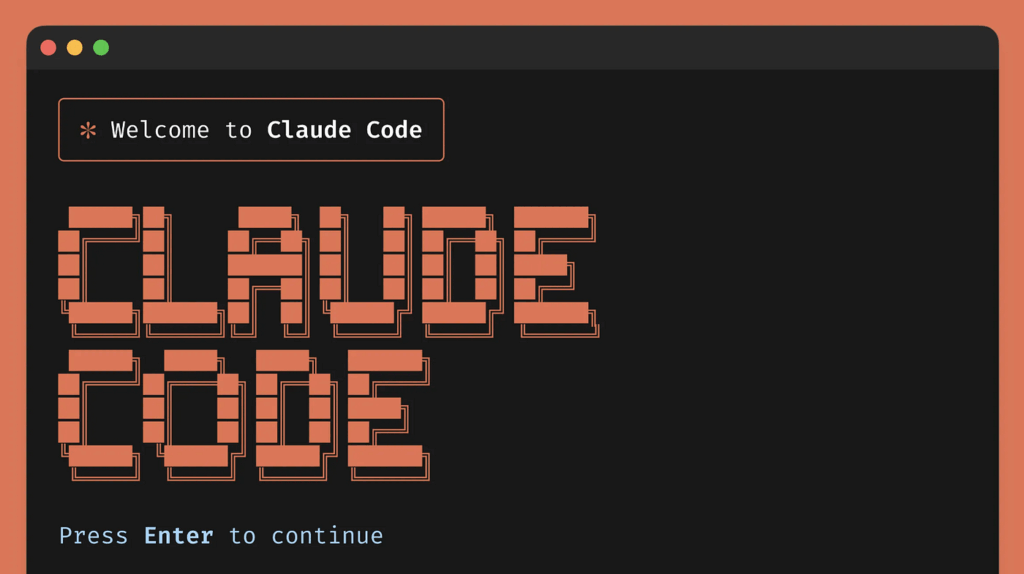
If you’re interested in vibe coding, you have probably come upon the “What is Claude Code?” question. Antropic’s agentic coding tool works as a full-fledged AI coding partner that understands entire software projects. Unlike Replit, it is not an all-in-one solution; instead, developer workflows rely on advanced AI Agents used through editors, CLIs, or custom integrations.
You can work with reasoning-heavy tasks like refactoring, documentation, and complex logic generation. Claude Code outperforms many tools in code understanding and quality, but it’s more of an AI layer than a development environment; infrastructure, collaboration, and deployment are handled elsewhere.
Pros:
- Outstanding code comprehension
- High-quality AI output
- Flexible option for integrations
Cons:
- It’s not a platform
- Doesn’t have hosting or backend
- Requires additional tools
5. Bolt.new – Best for solo app builders needing to validate ideas quickly
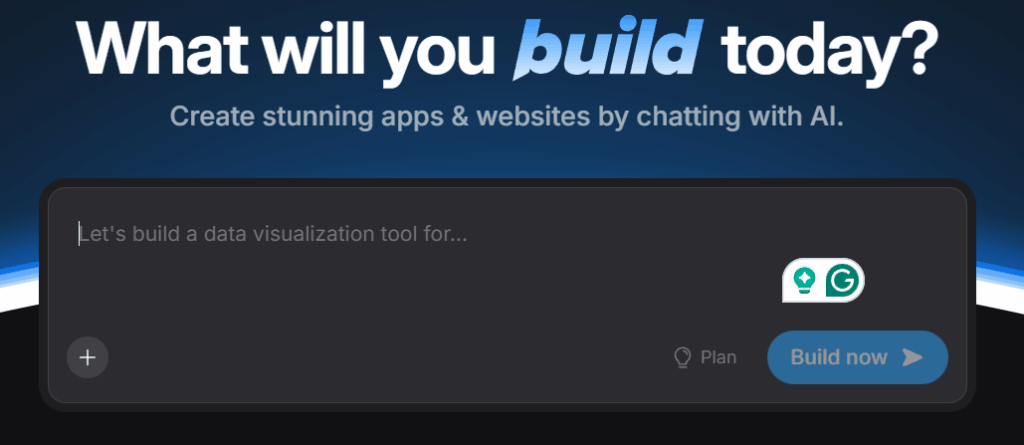
Bolt’s straightforward interface and comprehensive capabilities attract many new users daily. It is an AI driven tool with focus on rapidly generating full-stack applications from prompts. The speed and immediate results are why Bolt gains popularity. Like other vibe coding tools, it is designed for rapid iteration.
As a Replit alternative, it works well for early development and experimentation, but it falls short on the deeper infrastructure and governance needed for long-term projects. Teams will love it at first, but can outgrow Bolt’s capabilities once applications come closer to production.
Pros:
- Speedy time to first app
- Simple interface
- Works well for proof of concepts
Cons:
- Has limited production controls
- Shallow backend customization
- Not suitable for larger teams
Conclusion
Numbers don’t lie, and Replit is still a strong contender for learning, experimentation, and fast prototyping. Since no tool is perfect, some Replit shortcomings created space for alternative solutions. Replit and most of its alternatives optimize for AI-driven developer convenience and speed.
FuseBase has a different approach, with a focus on execution at scale. It provides backend, collaboration, and AI infrastructure, making AI code usable in real world. Popular tools like Cursor and Claude Code function as AI-assisted development solutions, not platforms. Lovable and Bolt help with speed and creation of fast AI-generated prototypes and apps.
The choice of your vibe coding companion depends on your needs, but it shouldn’t be solely about writing code faster; it should also consider scaling, security, and surviving past the prototype stage.
Found it useful? Share the article with your community
Subscribe to our blog!
Get weekly tips and insights on how to grow your business